Showing posts with label farmer's markets. Show all posts

Thursday, May 10, 2012

Strawberry upside-down cake


I like making upside-down cakes. They can be a bit of a gamble: Will the whole thing come out of the pan beautifully, or will it crumble into a delicious, but hideous mess? When they come out well, they can be so beautiful: Glorious jewel-like fruit glistening in deep-brown caramel both gooey and with a lacy edge of crispness. Then there is the contrast of the slight hit of acid from the fruit against soft sweet cake. Oh yeah...


The other thing I like about them is that they are endlessly variable. Once you get a basic batter and caramel down, you can switch up the fruit and the flavor of the batter in nearly endless ways (which just sparked an idea about inventing a savory upside-down cake at some point--maybe later this summer with tomatoes and some of the beautiful goat cheese from Cherry Glen--but I digress). For example, during summer you could use peaches, plums, cherries, blackberries--whatever is fresh and good and loading down the tables at the farmer's market. In fall, you could use apples, pears, and cranberries. To complement different fruits, you could flavor the batter with lemon zest, cinnamon, cardamom, vanilla--whatever strikes your fancy and suits your tastes.


In this case, my fancy was struck when I went looking for strawberry-intensive recipes for a treat to bring to a brunch. I came across several tasty ones at Joy the Baker's blog, including a brown butter banana strawberry bread (looks so delicious) and a strawberry balsamic flatbread (most intriguing), but what really sparked my thinking was the strawberry upside-down cake with cardamom. Oh yeah! I could make an upside-down cake with strawberries. Only, instead of using cardamom, I would caramelize the strawberries, and instead of cinnamon in my batter, I would use lemon zest because lemon and strawberries just play so nicely together. Oh boy, oh boy, oh boy.


So I got to work. I had a quart of strawberries from the farmer's market to hull (I bought two actually, but the other one is for eating fresh), caramel to make, and a batter to whip up. Here's how to proceed.*


Topping
  • 6 Tbsp unsalted butter
  • 1 packed cup brown sugar
  • 1 Tbsp local honey
  • 1 quart strawberries, hulled and sliced 
(If you aren't using a cast-iron skillet to make this cake, make the caramel separately on the stove and then pour it into the cake pan you plan to use; use an 8- to 9-inch pan. Springform would probably help you out a bunch.)
  1. Pre-heat the oven to 350 degrees Fahrenheit. 
  2. Melt the butter, let it get foamy and slightly brown. (Keep an eye on it, you do not want burnt butter in your cake. Or in any dish you make, ever.)
  3. Add brown sugar and honey and stir until the brown sugar is mostly melted. 
  4. Take the pan off the heat and add the strawberries. (The heat of the sugar-butter mixture will slightly cook the strawberries, and a scent will rise that is indescribably beautiful. Just breathe it in and count yourself lucky to experience such a thing of ephemeral beauty.) If you are using a cake pan, pour the whole mixture into the pan. Set it aside while you make the batter.   

Cake Batter
  • 6 Tbsp butter, room temperature
  • 1 cup white sugar
  • 2 large eggs
  • 1/2 tsp vanilla extract
  • 1 1/2 cup all-purpose flour
  • 2 tsp baking powder
  • 1/4 tsp salt
  • zest from one lemon, finely chopped or grated
  • 1/2 cup whole milk
  1. Using a stand mixer, whip the butter silly. No. Sorry. Whip the butter until it's fluffy. The paddle attachment is good for this.  
  2. Add the sugar to the butter and whip that until it's creamy. If you are starting with cold butter, this could take a while.
  3. While the butter and sugar are working, add flour, baking powder, salt, and lemon zest to a bowl. Mix everything together with a whisk and set it aside. 
  4. OK, now that your butter and sugar is fluffy and pale gold, add one egg at a time. Beat them into the butter-sugar mixture until fluffy. Even more fluffy! Lots of fluffy. 
  5. Next, mix in the vanilla extract. 
  6. Finally add the flour mixture and the milk, alternating between about a third of the flour and a third of the milk until you've added it all. Mix until the flour and the milk are just incorporated and then stop the machine. (If you keep beating the batter, you will get a tough cake. And you don't want a tough cake unless you are planning to throw it at someone you are mad at. And why would you be mad at someone? You have these gorgeous strawberries and this fluffy cake batter.)
  7. Scrape the batter over the strawberries and caramel and smooth the batter as best you can (this is a thick batter that doesn't spread very easily, but don't worry about it being uneven; it will spread nicely in the oven). 
  8. Slide the pan into the hot oven and let it bake for 1 hour and 5 minutes. Take it out and let it cool for 30 minutes before flipping it over onto a serving plate. Enjoy it warm or cold. Serve it with ice cream or some fresh whipped cream or all by itself.

* This recipe was adapted from this oh-so-good plum upside-down cake from Epicurious.

Wednesday, November 2, 2011

Local food is elitist? Part I

I am fan of Mark Bittman. I don't always agree with him, but I do more often than not. His recent post, "Local Food: No Elitist Plot," really pissed me off. Not because I disagree with Bittman, but because of this notion that eating local food in season is in some way elitist and snobby. Really? The method of sourcing food that we've used to get our food for about 250,000 years is elitist? Wow. The fundamental reason for the planet's many and distinctive food cultures is snobby? What a thoroughly ridiculous, absurd idea.

So what's perceived as elitist about it? For one thing, local food is nearly always placed in direct opposition to fast food, junk food, convenience foods of any kind--sort of the local, liberal, environmentally friendly yin to the industrial yang of cheap food. (Don't get me wrong: I know several local farmers, and their political leanings run the gamut.) Fast food is cheap and noncomplex and requires no work to prepare and eat; thus it appeals to many fundamental American values. By providing a lot of food for what seems like little money (here's another Bittman piece about the supposed cheapness of fast food), it wraps itself in a robe of thriftiness, of good old American hard-workingness. By dimming our senses with blasts of salt and sugar, it ensures we are incapable of experiencing the subtler pleasures of real food. And finally, by being so easy to get, it suggests respect for the value of our time. It seems to say, "I understand you don't have time for this fancy food nonsense; here's something that'll get the eating job done so that you can get on with the hard work of your day."

In contrast, local food does not seem cheap, especially if you are used to getting groceries from discount chains. If you typically buy a dozen eggs for 99 cents, $5 for a dozen will sting. However, you pay for that cheap-looking 99 cents in a lot of other ways both financial and, well, moral: taxes that pay for industrial farm subsidies, farmworker abuse, environmental costs, mass food poisoning events, other health costs, and so forth. (I would love to see a study that calculates the real cost of a dozen eggs. If anyone has ever seen one, please let me know.) When you  realize that the farmer at the farmer's market is demanding prices that cover his or her real costs and that you already paid extra for the cheap food at the grocery store, those high prices seem a lot less unreasonable and elitist(1). (Also, you start to ask yourself, who asked my permission to spend my money on appeasing on giant, industrial corn producers?)

Another problem with the seeming cheapness of industrial food is that when you make something seem cheap, people will start to treat it that way. In other words, it loses its value. This may not seem like that big a deal; why would it matter that people think food is cheap? Well, for one thing, cheapening food devalues the very hard labor that people put into growing it (and if you are a meat eater like me, minimizes the life of the animal). And that just kind of sticks in my craw a bit.

But devaluing food also has implications for human culture and health. Sharing food, eating together, teaching one another to cook--all these food-related activities and more comprise some of the most important ways that people create and transmit culture as well as form bonds with one another. When the food you eat loses value, you are less likely to engage in those kinds of behaviors. When you pick up that  super-extra-duper-value meal at the drive-through window and eat it in the car on the way home, you lose opportunities to communicate with other people, to learn something, to teach something, or even to just relax and enjoy your food--to enrich your life. So the food and the eating experience don't satisfy. You end up wanting more (whether food or human interaction is another question). Food loses it specialness; it becomes something to engage in any time, any place. So you eat more. And more. And then the portion sizes seem off if they aren't huge. And the taste seems bland if the food isn't drenched in salt or sugar. And suddenly you find yourself weighing more, struggling with hypertension and/or diabetes, wondering how the heck it happened.

Speaking of wondering what happened, I seem to have gotten off track of my original topic, which was the absurdity of the elitism charge on local food, so I will get back to that in a future blog post. (I've also got some nice recipes for cream of tomato soup and finally made some great red beans and rice.)

(1) Of course, not everyone can afford food from the local farmer's market, but that has a lot to do with the way the current system is set up. If more farm subsidies were shifted from producing mass quantities of cheap commodity grain to local fruit and vegetable farms, it seems fairly certain that local farmers could and would lower their prices. That's more of a political issue, not just a change your personal habits and the market will come kind of issue.

[This was also published (with a prettier picture) at Pick-a-Pepper, a great website devoted to connecting local farmers, food artisans, and producers with local consumers, restaurants, and institutions. Check it out!]

Friday, September 30, 2011

Friday link roundup and a recipe for a savory version of French toast

A fair amount of cooking went on this week even though it didn't seem as though it was going to work out that way. You see, I neglected to go to the farmer's market last Saturday. I was too lazy to go. My son had his little Happy Feet Soccer class in the morning, and I didn't want to miss it again. As a result, I didn't have a whole lot of fresh ingredients to work with. But somehow I managed to pull out a great meat sauce on Monday, come up with a savory version of French toast and serve it with caramelized onions and bacon, and make red beans and rice last night. Tonight's Friday treat? This fondue minus the brandy. With some ice cream for dessert.

I'd love to share the red beans and rice recipe, but it's not there yet. I added too much tomato to the mix, making it too acidic. It was definitely edible, but it just wasn't up to the level of wow-I've-died-and-gone-to-food-heaven I was aiming for. Especially given the amount of time that went into it. And the fact that I used up all the rest of the delicious pickled pork Mike made a few weeks ago. Oh well.

Another disappointment this week was the photos of the savory French toast. Not pretty. Not appetizing. It's getting darker in the evening, so the natural light that makes photos gorgeous is fading, and I don't yet know how to compensate (if anyone has some tips, please share). So I deleted all my toast photos. Here are some photos of a stunning sunset we had a few days ago instead. Some of these look unreal.


Although things didn't work out perfectly on the cooking front this week, I am proud to say we didn't have to resort to picking up dinner from Chipotle (our go-to fast food restaurant because of their efforts to use ingredients that are as sustainable and local as possible). Don't get me wrong, I love their bowls, but it feels good to be the one who creates the food that goes on the table, you know?

I also came across several good articles to share:

  • I read this article about boiled cider from The Washington Post a couple of weeks ago and tried the accompanying recipe. It took all day to reduce the cider, but it was so worth it. I have this delicious syrup that I have been using to sweeten our morning oatmeal, and I also added some to the red beans and rice. It's so sweet and intense; it's like a sunrise explosion of sweet apple in your mouth. I am almost out and plan to make more this weekend. Another plus is that making it gives the house that fall smell of warm cider.
  • Here's a story about a family from Arizona that pledged to buy 100 percent local for an entire year. I come across stories like this from time to time where someone forgoes something entirely for a year or however long, and I have to admit I couldn't do that. I don't want to. I prefer to take a more evolutionary approach path to locavorism and sustainability by replacing, eliminating, or changing one thing at a time. It's what I can do. Still, these stories provide inspiration as well as ideas for what I could do better. 
  • Came across this story about a man who created his own bread starter, from which all his loaves of bread derive. I have tried making sourdough once--it was not a success--but I look forward to trying again some day.
  • On the farming and sustainability front, the Agronomy Journal published results from the first long-term, large-scale study of the economic feasibility of organic farming versus industrial farming. As it happens, organic farming is profitable in the long term. These kinds of results are really starting to break down old arguments that industrial methods are the only economically viable methods. Think about these results in combination with the United Nations' study's findings Civil Eats reports that indicate organic farming is a viable method for feeding everyone on the planet, and toxic status-quo industrial methods start to look increasingly out of touch.
  • Having grown up in Sweden where the potato is nearly as fundamental to the diet as rice is in China, this report from Marcus Samuelsson's website that the USDA plans to take potatoes off the menu just  pissed me off. Writer Dylan Rodgers was none too pleased either and explains the importance of the potato throughout history. 
  • In contrast, this story about the pawpaw from NPR made me very happy. The pawpaw is a native fruit. Mike and I hunted for them last year to try them, but we were too late. We found a location with a whole bunch of pawpaw trees, but most were down by the time we saw them. I am just excited that someone is paying attention to a homegrown fruit. Wonder if a wander in the woods is in the cards for me? 
So that's the article round-up for this week. And here's that recipe for a savory version of French toast I promised:
  • 8 slices bread
  • 1 cup half and half or cream 
  • 4 eggs
  • 1/2 cup grated cheese (Cheddar or Parmigiano Reggiano)
  • 1 tsp salt
  • 1/8 tsp ground pepper
  • 1/4 tsp smoked paprika
  • 1/2 tsp dried thyme
  • butter (for the skillet)
  1. Place bread slices in a glass baking pan
  2. Whisk together half and half, eggs, cheese, salt, pepper, paprika, and thyme. Pour the mixture over the bread in the pan. Let it sit for at least 10 minutes, but you can also start it the night before. (Flip the bread slices at least once to make sure both sides get a good soaking.) 
  3. When ready to cook, take the bread slices out of the baking pan and let them dry off for a few minutes on a baking rack while you melt some butter in a skillet over medium heat. 
  4. When the butter starts to sizzle and brown a little, place two slices in the pan. Let each side cook until golden brown (about 2-3 minutes) and remove from the heat (keep them warm in an oven heated to 275 degrees Fahrenheit while you do the next batches). Start each batch with a new pat of butter or else they will stick to the pan a lot. 
  5. Serve with caramelized onions and bacon (if you like). You can also add a tiny drizzle of the apple syrup I talked about up above. It's mighty good and makes a nice, simple breakfast for dinner.   


Monday, June 13, 2011

Connecting farmers and consumers: Two examples of solutions

Food processing and distribution systems are one of the biggest hurdles standing in the way of local food economies. Most of these systems have been optimized for industrial scales and simply don't allow people to access local food in a practical way. Thus, you end up buying asparagus that has been shipped from Chile, even though many local farmers have a glut of it that's fresher and better tasting (and hasn't traveled thousands of miles wasting who knows how much fuel).

    
Access to local food has certainly been a difficulty for me as I have tried to transition to eating a more local diet. I frequently go to at least two different farmer's markets every week to find specific products from specific farmers that I am particularly fond of. I have searched up and down nearby grocery aisles to find products that are from around here (or at least from the east coast), but sometimes those local products haven't been treated very well.


Obviously, there's a lot of leg work involved. So you can imagine my excitement when a friend of mine sent me this link today: Farmer Girls.net. The site is designed to provide the critical link between farmer and consumer, which so often hinders people from accessing local food. Websites like these is one more way that local farmers can connect with the buyer and sell their food. Basically the idea is that the consumer orders food from local farmers through the Internet and then picks it up at a certain time from specific locations in the Northern Virginia area. The website provides brief bios of farms and producers that participate, including information about whether they are certified organic, "beyond organic," conventional, or in transition.


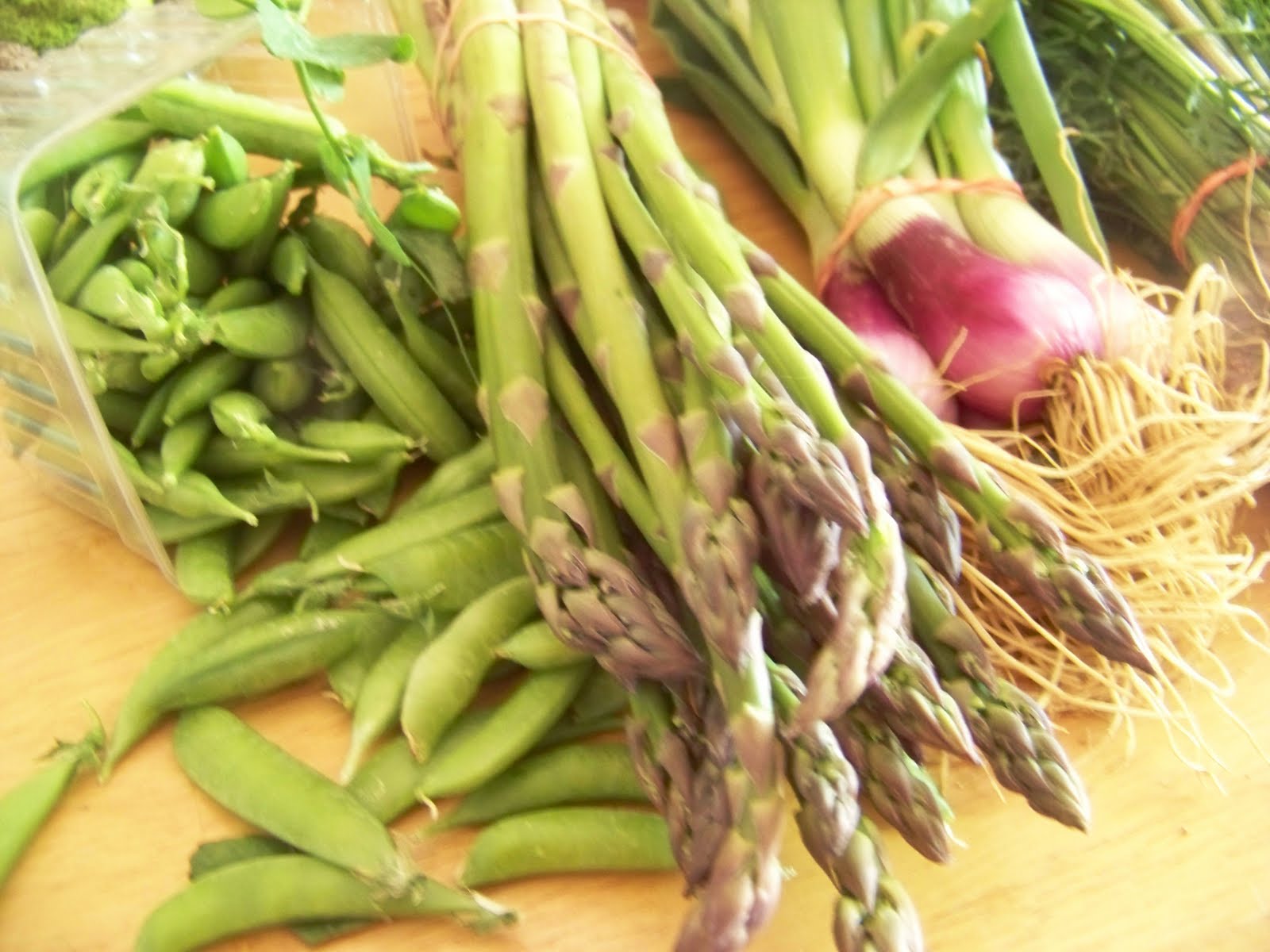
Of course, farmer's markets are the most common option (and the most enjoyable, at least for the consumer), but they can take a lot of time out of a farmer's day, can be expensive, and can be hard for people to get to. Also, although I know of a few winter's markets, most farm markets shut down in colder months, so that's several months out of every year when farmers aren't able to sell their wares. (Photos illustrate the goodies I purchased during a recent trip to the farmer's market.)


Another local distribution system that I have followed on Facebook for about a year now is The Local Food Hub, which is based out of Charlottesville, Virginia. This nonprofit works on bridging the divide between producers and consumers that can make eating local food so difficult. According to their website, they focus on three major issues related to local food: distribution, supply, and access.


To address distribution, they have a warehouse where they bring together produce from more than 50 farms, enabling purchasers for big institutions, including hospitals and schools, to purchase local food without having so much difficulty sourcing it.


Aggregating food like this enables farmers to focus more on producing the food, thus addressing supply. The Local Food Hub also provides a lot of educational programs, such as internships and workshops, enabling farmers to continually improve what they do and to bring up a new generation of farmers within the context of the Virginia food shed.


Finally, they provide access with a phone number that enables institutional purchasers to buy the large quantities of food they need and through partnerships that enable the Food Hub to get food to food banks and to needy neighborhoods. It's a cool organization (and I wish there was something like it a little closer to home).

These are just two options for accessing local food, but I hope to learn of more. I'll keep my ears open.    

Wednesday, June 8, 2011

Sublime strawberries: Two ways to preserve some of that goodness and beauty


I am a little out of practice with writing regularly. You work for years in a regular nine-to-five day job and fully plan to use your evenings wisely with creative pursuits like drawing, painting, and writing. But at the end of the day, you feel drained, barely able to get food on the table, dishes in the dishwasher, and the little guy to bed. Creativity is so far out of your grasp that you plunk down on the couch, throw on the tube, and stew in guilt: "I should be using my time better! If I was really committed, I would find the energy and the willpower." As time passes, your creative muscle starts to deteriorate a bit. To get it back into shape takes persistence and work, just like getting fit after years of mooing on the couch.

So, I haven't written for several days, which I feel guilty about. I have been cooking a lot, but I didn't get any pictures, and the stuff was small, and didn't I already write something about that...? The excuses and the fears pile up, effectively grinding momentum to a halt.


But I must force myself forward, get some writing down, take some photos, break out the charcoal and paper and draw. So, here are some thoughts about strawberries, which have dominated my kitchen for the last two weeks. The ubiquity of the strawberry can make you take it for granted. It shows up as an artificial flavor variety in neon-pink, crazy-quilt plastic packages at the convenience store. It's the little pop of color on top of that decadent chocolate dessert you really shouldn't have fallen for last night. They are available grossly oversized in every season at the grocery store. (That size? Not normal. Can you say octoploid?) So they somehow lose hold over your imagination. You don't get that excited about them.


Or do you? What a shame to let something so sweet and lovely slip into bland ubiquity. Especially when they can perfume a room or draw your eye on a cool spring morning, gleaming ruby red. When I was a kid, my mother never bought strawberries at the grocery store. One time, we were driving in Finland, on our way to visit my grandmother in Kokkola, my mother came to a screaming halt at the side of the road where a couple of people were selling strawberries out of the back of their car. She was so excited. To her this was a gift, a special moment in time. Perhaps the scarcity she lived with as a child (she was born during World War II, and food was hard to come by in Finland) had taught her the value of those sweet red jewels, early gifts of spring. In any case, we had to eat them at once, or they would lose their flavor she said. And so we did. Happily, we selected berry after berry from the box until they were gone. And then they were no more than a memory, but what a sweet and precious one.


It seems important to me to remember the value she placed on those berries every time I visit the farmer's market. Because eating in season is ephemeral; it changes from week to week. This week you are swamped with berries and asparagus, but next week they could be gone. So you grab everything you can, try and set by as much as you can because you don't know what you will find next week. This is both the joy and sometimes the sorrow of the farmer's market. I have many times come back to find the blueberries done for the season and kicking myself for having missed them.


So I have been trying my hardest to make the most of the strawberries by making saft (a Scandinavian fruit syrup you mix with water to make a refreshing drink) and jam. But I haven't made enough yet. My family already drank the saft, and I only got four jars of jam. So I hope there are still berries left at the market tomorrow. Both of the following recipes were adapted from Bonniers Stora Kokbok, which was my second cookbook--a gift from my mother that is completely beaten up. The spine is cracked to pieces, the book is falling apart, but I wouldn't give it up for the world. Part of the reason it is such a mess is because it was soaked through in a rainstorm during a motorcycle trip from Virginia to Colorado. But that may be a story for another day...

Strawberry Saft

Bring 3 deciliters of water to a boil in a big, nonreactive pot. Add 2 quarts of hulled, well-rinsed strawberries to the water (I am especially fond of the berries and fruits from Reid's Orchards. Their grapes look like little glass balls full of sunshine and taste as amazing. Absolutely gorgeous fruit.) Let the mass boil for about 10-15 minutes.

Line a colander with cheesecloth and raise it over a bowl. (I placed two chairs next to each other so that the colander hung down between them about half a foot over the bowl. You can find stands that will enable you to do the same, but the chairs work well.)


Pour the cooked strawberries into the colander and let the juice drip into the bowl for about an hour.

Measure the juice in the bowl. For every quart of juice, measure 6 deciliters of sugar. Bring the juice to boil and add the sugar. Let the sugar dissolve and the mixture cook for about 5 minutes. Skim the liquid. Then add the juice of one lemon (juice of limes will do in a pinch).

Then you can add it to clean, warm bottles and seal it to save for the winter. (We never get that far though; we end up devouring it in about a week.)

To serve, use 1 part saft to 4-5 parts water or seltzer.

Strawberry Jam Scented With Rosemary

2 quarts hulled, well-rinsed strawberries (let them run off for a few minutes on paper towels)
6 deciliters sugar
1 Tbsp dried rosemary
8 black peppercorns

Wrap the rosemary and the peppercorns into a tight little package with cheesecloth (the rosemary and the peppercorns should not be able to escape during cooking).

In a heavy pot, layer sugar and strawberries. Start and end with a layer of sugar. Let the mixture sit for at least an hour, you can go up to 24 hours.

Bring the mass in the pot very slowly to a boil. Let it simmer for an hour, skimming regularly. (Tips for skimming: (1) Get a skimmer, it makes a big difference and doesn't have to cost a lot. (2) Keep a container of cold water next to the pot. Dip the skimmer into the cold water before and after skimming. Replace water as desired.)

Take out the spice bag and discard it. Spoon the jam into warm, clean canning jars and process in a hot water bath for about 15 minutes. (If you've never done any canning before, I would definitely do a little research to learn some more tips and tricks. Because I am still a novice, I don't want to give you the wrong information.)

If, for some reason, your jam doesn't jell, don't despair. It will still make a delicious topping for pancakes (thanks to my friend Walter for the suggestion), or it will be amazing on ice cream. Now go enjoy those strawberries before they are gone!

Update: To make sure your jams and jellies are safe to eat, check the National Center for Home Food Preservation.

Saturday, April 30, 2011

Seduced by the first spring vegetables at the farmer's market

Kandinsky didn't like green. In On the Spiritual in Art, he describes it this way:

"Passivity is the most characteristic quality of absolute green, a quality tainted by a suggestion of obese self-satisfaction. Thus, pure green is to the realm of color what the so-called bourgeoisie is to human society: it is an immobile, complacent element, limited in every respect. This green is like a fat, extremely healthy cow, lying motionless, fit only for chewing the cud, regarding the world with stupid, lackluster eyes. Green is the principal color of summer, when nature has outlived the year's time of storm and stress, the spring, and has sunk into self-contented repose." (Kandinsky: Complete Writings on Art, edited by Kenneth C. Lindsay and Peter Vergo, Da Capo Press, 1994, p. 183)

Clearly, Kandinsky never saw a Virginia spring after the leaves have filled in and before the dry heat of summer has cast its dusty, yellowing net. This green gathers sun to itself, transmuting it into a fiery halo that spreads its own light on the day. Not a contented cow chewing its cud, but a fierce green knight driving out the cold, gray ogre of winter.     


This potent green flashed in my eyes as I drove to the farmer's market, hoping that I might at last find some fresh vegetables and perhaps even some strawberries to dispel the doldrums of winter. And, happily enough, I did. Seduced by the offerings, I bought asparagus, spring onions, peas, fennel, and some ugly little purple carrots.


These may not be at the peak of their flavor, but they have the gift of newness, of being the first green foods to present themselves as miracles of sun and soil and rain. Now, what to do with them? Perhaps try one of Bittman's recipes for the asparagus? With the fresh Haskins bacon that I also purchased at the market? And what of the peas? A sweet addition to a nice pasta, perhaps? Or a stirfry? Perhaps a salad with the carrots?  And what of the fennel bulb? It's not a vegetable I am familiar with, but I am always excited to experiment, to try something new. The spring onions will of course add flavor to all these, and the green tops color. Most important is to have a light touch, to treat this lovely, fresh produce with gentle reverence, allowing their essential selves to sing.  

And what of strawberries, any luck there? Happily yes. Some bumpy, imperfect red beauties. These gems are too special to mess about with at all. Perhaps a few specks of sugar to bring out their flavor. Or even a tiny dusting of white pepper. Again, a light touch to allow their own true nature to shine.   

That's the beauty of real, fresh food, in season: You don't have to do much with it to make something extraordinary.  

Thursday, April 28, 2011

Where are the spring goodies? I've waited, haven't I?

In May, two of the farmer's markets closest to me will be opening up again, and I can't wait. Hopefully I will finally get some of the goodies I have been waiting so anxiously for, in particular, asparagus and strawberries.  Mark Bittman just posted a chart of various methods of cooking asparagus with some delectable variations. (Actually the graphic posted with the article would make a great poster: Get on it, NYT.) I am anxious to try at least a few of those variations, especially steamed with brown butter (I mean, it's butter, c'mon) and, of course, roasted with bacon. (I could go on all day about bacon, but I will try to restrain myself. I mean, seriously though, bacon...oh yeah, I was going to restrain myself.) I've got another favorite recipe for asparagus that came from the April 2001 issue of Bon Appetit magazine that involves roasting the asparagus and serving it with crumbled goat cheese, crumbled bacon, some lemon zest, and a drizzle of olive oil. So good. (You can find a more detailed recipe here.)

And then, of course, strawberries will be coming in soon. I finally had to cave and buy some organic strawberries shipped all the way here from California to eat with breakfast tomorrow morning (yes, yes, yes, I have decided to be ridiculous / have some fun and try to have crumpets and tea with strawberries and clotted cream to celebrate the royal wedding). My son (four) and I shared a few before dinner, and they were good, but definitely missing that otherworldly, almost savory quality that local, roadside-stand strawberries have. They were pretty though and not too big. The best strawberries are always small. (In fact, those giant strawberries that you sometimes see in the grocery store are octaploids, which means they have eight sets of chromosomes. That's why they get so big, but they are never so tasty.)

While waiting for the spring deliciousness to become abundant at the supermarket, I continue to work on depleting my freezer and pantry. Today's experiment was with red quinoa, a grain that I have never tried before in any form, but I thought that Heidi Swanson of the blog 101 Cookbooks might have some guidance for me, and indeed she did. I found this recipe, which I decided to riff on using the ingredients that I had at home. Instead of asparagus and walnuts, I dug a small piece of pork tenderloin out of the freezer, defrosted it, sliced it as thin as I could and marinated it in a combination of soy sauce, honey, lemon juice, garlic, ginger, dried lemongrass, one piece of star anise, black pepper, and coriander (the last four or five ingredients were sort of tossed in there with an attitude like, well, that's kind of Asian-y, right? I am afraid I am not at all expert with Asian flavors). Then, while cooking the quinoa according to package directions (it takes little longer than the time it takes to cook parboiled rice), I sliced carrots into matchsticks and an onion into slivers, stir-fried the veg in a wok with just canola oil, put that aside and stir-fried the meat, and finally put it all together. I served the stir-fry with the quinoa as a replacement for rice, for which it served its purpose adequately. To be honest, the flavor of the quinoa was pretty nondescript to me, nearly as bland as parboiled rice. The smell of the quinoa was a bit stronger, almost greener (not entirely in a pleasant way), however the little snap of the grains between my teeth was pleasant and kind of addictive. I don't love it, but I will probably try it again.

Saturday, April 16, 2011

In search of...perfect eggs

Don't know why...
There's no sun up in the sky...
Stormy weather...

Billie Holiday crooned on the car stereo. The rain pelted the windshield with big, fat, juicy drops. The interior of the car was warm and dry--a cozy bubble travelling through a chilly, soaking wet spring morning. Everywhere hazes of fresh green and the pale purple of the flowering redbud trees softened the horizon. I was on my way to Leesburg to see a man about some eggs.

I woke up this morning with a craving for eggs. But not just any eggs, specifically Haskins Family Farm eggs.  I know, weird right? Having a craving for eggs seems odd enough, but eggs from a particular seller? I mean, eggs are eggs, right?

Eh, no. I haven't eaten supermarket eggs in more than two years now. For a long time, I was a lucky recipient of my former boss and friend Jacki's chicken's eggs, but she left her job and now we don't see each other as often (sigh--and not just for the eggs). I had to find another source, because reading Omnivore's Dilemma and  watching Food, Inc. basically turned me off industrial food and especially animal products.

So I went to the winter farmer's market in Leesburg (discovered thanks to a Washington Post article I read a couple years ago). I tried eggs from a few different sources there, and most were excellent (although I did get a batch once that tasted strongly of fish; it was so revolting I actually had to throw the eggs out). But I always wanted to try the Haskins's eggs, but every time we got to their stand either to pick up our CSA chicken or to buy some of their amazing bacon, they were always out. But, finally, a couple of weeks ago, they had some left, and I bought a dozen. What a treat to open the box and find a lovely assortment of eggs in various shades of white, brown, and green; one was a tiny, speckled thing that seemed (nearly) too pretty to eat.

I got them home and decided to try some right away. I fried eggs, sunny side up, to serve on buttered toast--a simple dish I make several times a week for breakfast or lunch (and sometimes when in a hurry, dinner). Something was different about these eggs. When I cracked them, the yolk was an orangey yellow, the richest color I'd ever seen in an egg yolk (and remember, I have been eating excellent eggs for years ow), and the white didn't spread out all over the pan, but instead assembled itself into a neat oval around the yolk. I was enamored of the beauty of this egg, but the proof was in the cooking and the tasting. It cooked more evenly than many eggs that I have cooked. I didn't have the issue with a slightly runny white (yuck) when the yolk was cooked as much as I wanted it to be cooked. Then I ate it. In the same way a chicken that eats bugs and runs around freely tastes "chickenier," the egg tasted eggier. And the rich, unctuous mouth feel of the yolk was beautiful. This was why I found myself out in the pouring rain without an umbrella this morning, because I just had to have those eggs!

Soaking wet and returning home with my haul of two dozen eggs, I decided to test whether there really was a difference. After all, I haven't seen or eaten one in a long time. So I stopped at a local grocery store and picked up a dozen standard commercial eggs to do a side-by-side comparison (see the photographs). The yolk of the Haskins egg had a deeper color, and the white had greater viscosity and tended not to spread out as much. Next to it, the industrial egg looked anemic, and the white spread out in a most unappealingly watery way.

I am afraid I didn't do a one-to-one taste test. For one thing, I wasn't sure I could fairly judge the taste given that I would know which egg was which. But truthfully, my motives were less pure than a desire for fairness. The industrial egg simply gave me the willies. I even hesitated about adding it to the compost heap, but that's where it eventually ended up. The Haskins egg went into a pan with some olive oil, a sprinkle of salt and white pepper, and then served on toast. Yum.


The egg on the right is the Haskins egg. Note the deeper color and its general perkiness.

On the industrial egg side, the white spread out like water over most of the plate.
So now that I have my two dozen gorgeous eggs (minus one), I think I will try some new egg dishes. Just a few days ago, Görvälns Slott (a castle in the neighborhood where I grew up in Sweden that is now an inn) posted some beautiful-looking egg recipes, which I hope to try soon.

Monday, April 11, 2011

I am so over winter food!

I am so bored with food right now. When you eat seasonally, transitioning between seasons is always hard, but this time of year is particularly dreary. You are tired of eating frozen berries and mealy apples, but you know you need to clear out the freezer for all the good new stuff that will come. A few wrinkly sweet potatoes and rock-hard squash (what were those called again, celebration squash?) loiter at the bottom of the veggie basket, up to no good with some wayward onion skins. Most sellers at the winter farmer's market in Leesburg seem tired or bored, waiting for the release of spring and summer, oh sweet explosive gorgeous summer. When Mike says he was hoping to see some vegetables, one seller calls out, "No, won't be any vegetables until the end of the month." Haven't seen the carrot guy with his sweet little jewel-bright roots in weeks. The eggs are gorgeous with their perky, deep orange yolks and becoming increasingly abundant, but I feel as though my capacity to come up with things to do with them is waning along with the variety of foods available to me. I look around at the market, I see cupcakes, goat milk soap, honey, and lots of meats--all good stuff--but somehow much has lost its luster.

So what then? I guess I need to kick it in gear, get inspired, get  creative--try things that I might never try otherwise. Dig out the stuff from the back of the freezer and come up with a way to make it interesting (and good, of course). Try something I haven't done before. I've been toying with the idea of making noodles or pasta for a long time. Maybe now would be a good time for that. Maybe I need to learn to make a different bread (I make most of the bread we eat; when we first tried to eat locally and without a lot of industrial ingredients, we discovered quickly that most commercial bread is chock full of weirdness). I tried making sourdough once and failed sadly (tough stuff--should have used it for insulation or in place of concrete barriers), and I've been meaning to try again with another recipe, but I haven't gotten around to it yet.

What I have tried to do recently is to institute Meatless Mondays and to start eating more fish. What both of these attempts have taught me is that I know less about some kinds of food and cooking than I thought. Creating vegetarian meals is hard because they frequently lack a centerpiece; it all seems like sides. They are often complex, too. I started my Meatless Monday career with a great pizza, but it was a fussier recipe than I typically do on a weeknight. (I will be using the pizza dough recipe again, however.)

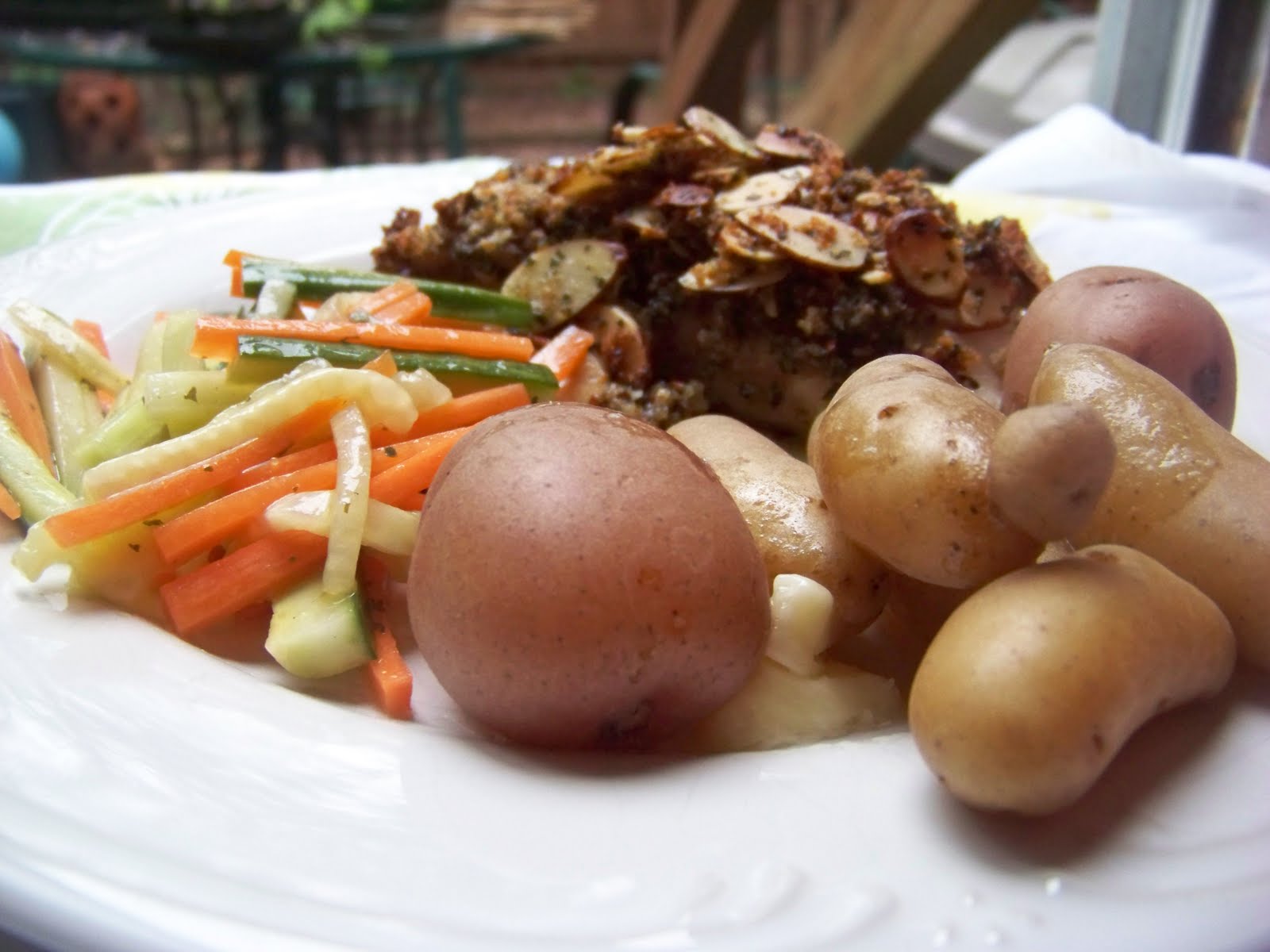
And, despite my Nordic heritage, I am not much of a fish eater or cook. So far I have made one fish recipe that I like (the recipe is at the end of this post), which is a traditional Swedish dish that, believe it or not, I used to eat in grade school and like (unlike fish balls--gag--or blood pudding--gag even worse). In Swedish it's called mandelfisk, which translates into almond fish, and it's just a nice yummy, breaded fish with nuts (and lots of butter). I like to eat it with boiled Yukon Gold potatoes (or any other nice, buttery yellow-skinned potato) with some melted butter and parsley and some grated carrots, perhaps with a squeeze of lemon or a dash of vinegar. Simple, clean tastes that bring up memories of better times as a kid in Sweden. Like when I spent a week on my aunt and uncle's boat in the Stockholm archipelago, eating a fresh fish stew with butter melting into rings in it ("leaden circles dissolved in the air"), giggling with my cousin while rosy, hot-faced, and sweetly tired from a long day in the sun and wind.


Mandelfisk
4 small files of white-fleshed, flaky fish (I use Chesapeake rockfish, because it's the one fish that I know I can get locally; it's a little strong, but still very tasty)
4 Tbsp butter
1 cup breadcrumbs (fresh preferably, which are really easy to make if you have a food processor: just throw some chunks of fresh bread in and whir it up until it's fine)
1/2 cup flaked almonds (or if you've got whole almonds, you can just chop them, which I discovered in a pinch)
a bunch of fresh parsley, chopped (if you have it); if not, use a Tbsp dried
1 clove garlic, chopped or crushed

  1. Heat your oven to 400 degrees (Fahrenheit)
  2. Butter a baking dish
  3. Rinse your fish files in cold water, pat dry with paper towels, salt and pepper to taste
  4. Place your fish files in the buttered baking dish
  5. Meanwhile, in a pan over medium heat, melt the butter
  6. Add garlic, parsley, breadcrumbs, and almonds; mix everything into a kind of crumble and take it off the heat
  7. Pack the breadcrumb mixture evenly onto the top of your fish files
  8. Put the fish in the oven and let it bake for about 20 minutes, or until the fish is flaky and the breadcrumb mixture is golden brown

Friday, April 8, 2011

So what am I doing with this blog anyway?

For weeks, perhaps months, I have been planning to start this blog about sourcing, making, and eating food, but I have procrastinated. I kept trying to decide what blog service to use and what to call it and what is it going to be about and do I have a point of view that's fresh.I hesitated, hemmed, hawed. A few nights ago, I was trying to sleep and writing my First Blog Post in my head, and I asked myself: What's taking so long? Why haven't you done this yet? The service and the name aren't that big a deal, are they? Then a tiny voice piped up from the back of the room (because I view my mind as a vast conference room with lots of people there to listen to what I have to say--no, I don't really, but I thought it was kind of fun to imagine anyway), so, where was I? Oh yeah, little voice, back of room, said "But what if it isn't any good?" Yeah, you nailed it, tiny voice: I was scared. I am scared. What if this isn't any good? What if no one wants to read what I have to say about food? And what is it exactly that I want to say about food? Food is good. Enjoyed with friends, it's wonderful. A lot of people are out there talking about food. What do I have to bring to the table?

Well, these are some reasons I want to write about food:

About a year ago in January, my husband Mike and I borrowed an audiobook version of Michael Pollan's In Defense of Food. When we were done with that, we went on to Omnivore's Dilemma, which more than any other book made us want to opt out of the industrial food chain and so we set out to do that. It wasn't easy, and it still isn't. We have changed our behaviors with regard to getting and making food, and we have changed the way that we think about food, but the practices of avoiding food shipped from halfway across the world (especially in winter), of making your own, of trying to eat mostly local and sustainably raised food are hard. But to us they are incredibly meaningful and so we keep at it. In fact, trying to eat the way that we want to eat is so meaningful to us that I hope to be able to share some of what we have learned and hopefully get others to opt out of industrial food too. Because I also think that the more people opt out of it, the easier getting local, sustainable, nonindustrial, and seasonable food will become as local food distribution becomes more efficient. So there's a selfish aspect to it: I want you to do what I do so that it gets easier for everyone.

Then, there is the love and passion aspect to it, and that encompasses so many different components that I easily get lost. There's the quality of the food that I get from people I directly support. There's the sense of belonging to a community, a place, where I have a stake in the soil, in the air and water, and in the people who live near me. One of the most potent ways I know to connect to the world is to eat. Food is a distillation of sun, soil, place, air. In his book,  NOMA: Time and Place in Nordic Cuisine and in his food, chef Rene Redzepi talks about this connection between what we eat and where we are as a way to create sense memories, and in a sense to create an ephemeral art. I cannot create the kind of art that Rene creates, but to take some of that spirit and infuse it into the quotidien is something I want to strive for. I think that the practice of thinking and writing about food can help me to make daily life an art form, which makes my life more meaningful and more beautiful and hopefully does the same for my family.

Finally (at least for this post--there are more reasons and I will develop them as we go along), I want to teach what I know about cooking by passing along my successes and sharing my failures. Hopefully in the process I can keep getting better and learning more.

So this blog will be a mish-mash of recipes and tips, of food politics, of raving about the good (and perhaps the bad), of sharing stuff I learn, of creating art. Hopefully it will entertain, inform, inspire--I mean, why else would anyone write?

And to get started with the recipes, here's my recipe for roast chicken (which I planned to have for dinner tonight, but a family thing suddenly came up):

1 whole chicken (I get mine from Haskins Family Farm, which I will rave about at another time)
salt, white pepper
2 lemons (unfortunately usually not local, but I do have a lemon tree now!), one juiced, the other cut in half
herbs to taste or as available
unsalted butter

  1. Preheat the oven to 425 degrees
  2. Butter a baking dish (you want it to be deep so that it can hold some water)
  3. Rinse the chicken with cold water, inside and out
  4. Pat the chicken dry with paper towels
  5. Grab about a tablespoon of salt and rub the inside and outside of the chicken (sometimes you will need more--don't be afraid to salt a lot!)
  6. Rub the inside and outside of the chicken with white pepper
  7. Stuff the lemon halves inside the chicken along with any herbs that you have available (if you don't have any, you can skip this)
  8. Place the chicken in the baking dish, fill the bottom wiht about an inch of water
  9. Put it in the over for 30 minutes
  10. After 30 minutes, pull it out, turn the chicken over in the dish, and pour lemon juice all over it
  11. Back in the oven, 20 minutes
  12. Pull it out, turn it over, and rub the chicken with 1 tablespoon of butter
  13. Back in the oven, 20 minutes
  14. Out of the oven, pour pan drippings over the chicken, flip it over, in again, 15 minutes (you will keep doing this last step for 2-3 more times depending on the size of the chicken). I usually check doneness by poking the joint between the leg and the body to see if the juices that run out are clear. Others prefer a thermometer, which should read about 165 degrees in the thickest part of the thigh.
  15. When it is done, remove the chicken from the dripping and let it stand and rest on a platter for about 10 minutes.
In the meantime, you can make gravy with the drippings. Use a fat separator and let the drippings divide into two layers. Grab about 2-3 tablespoons of the fat and put it into a pan. Add 2-3 tablespoons of flour to the fat and cook for a few minutes (don't let it burn). Then whisking fast, add the drippings (minus fat) to the fat and flour in the pan. It will thicken quickly. If it gets too thick, you can always add some milk, cream, or stock to thin it. Salt and pepper to taste (mine is usually pretty salty, so I definitely check the salt before adding any).

I usually serve roast chicken with roasted root vegetables (whatever is in season or I have around the house) and some kind of salad. Again, it really depends on what's available and looks good at the farmer's market.